




Brand Board
A system board that brings logo, colour, typography, pattern, and visual standards into one view.

The visual system keeps one standard across identity, layout, image, and motion.
Direction · in motion
The name resolves, the line holds
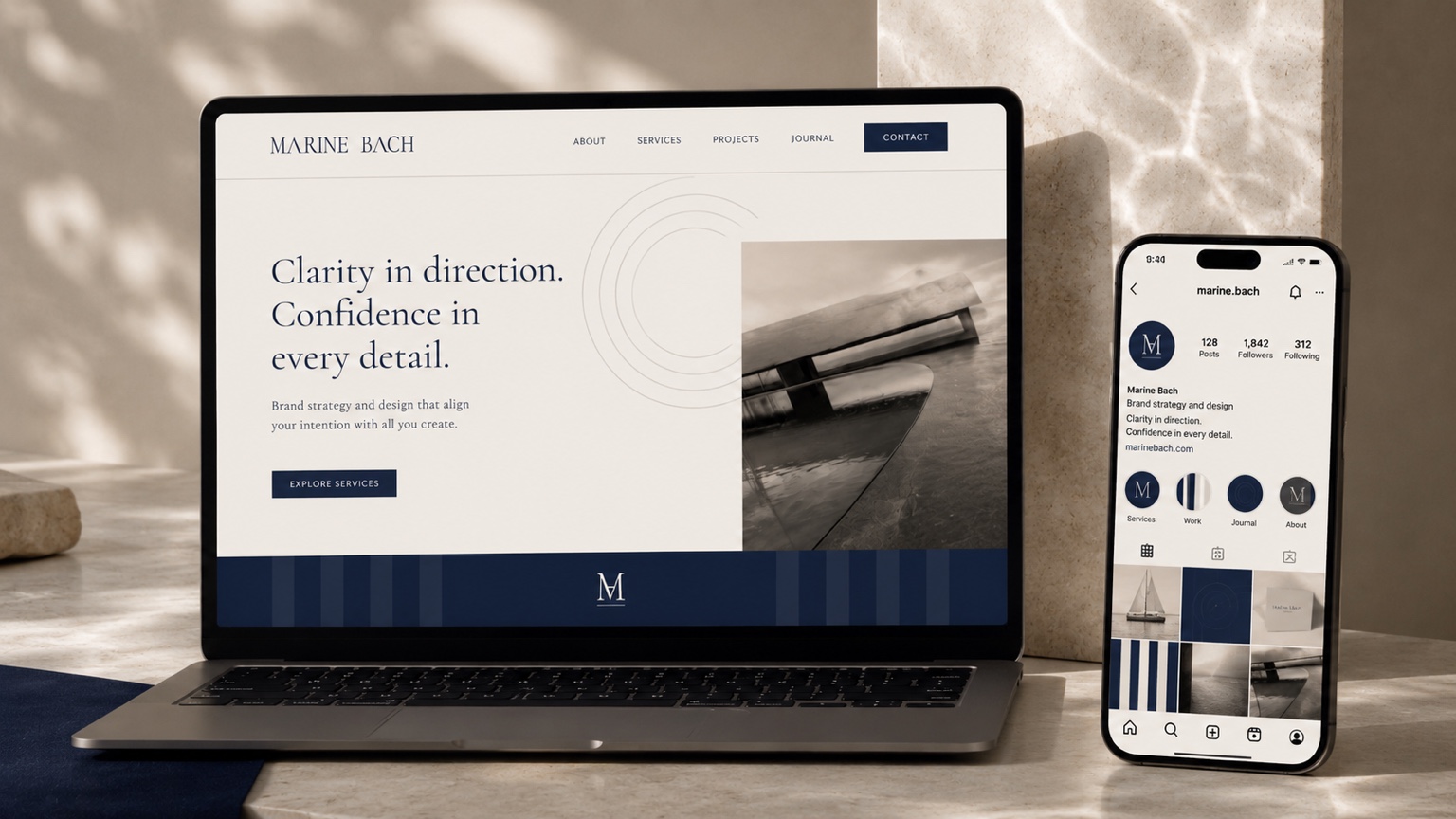
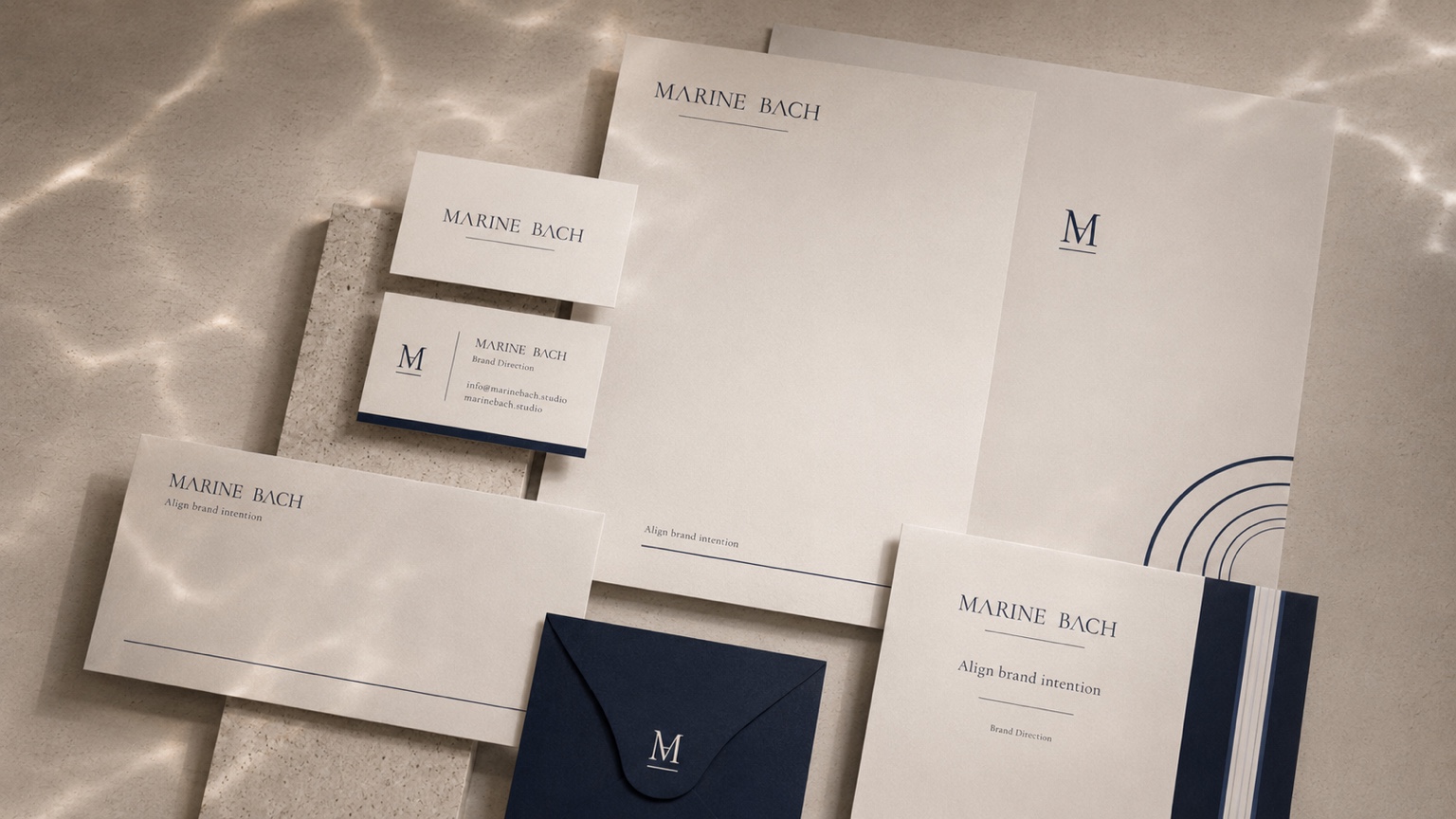
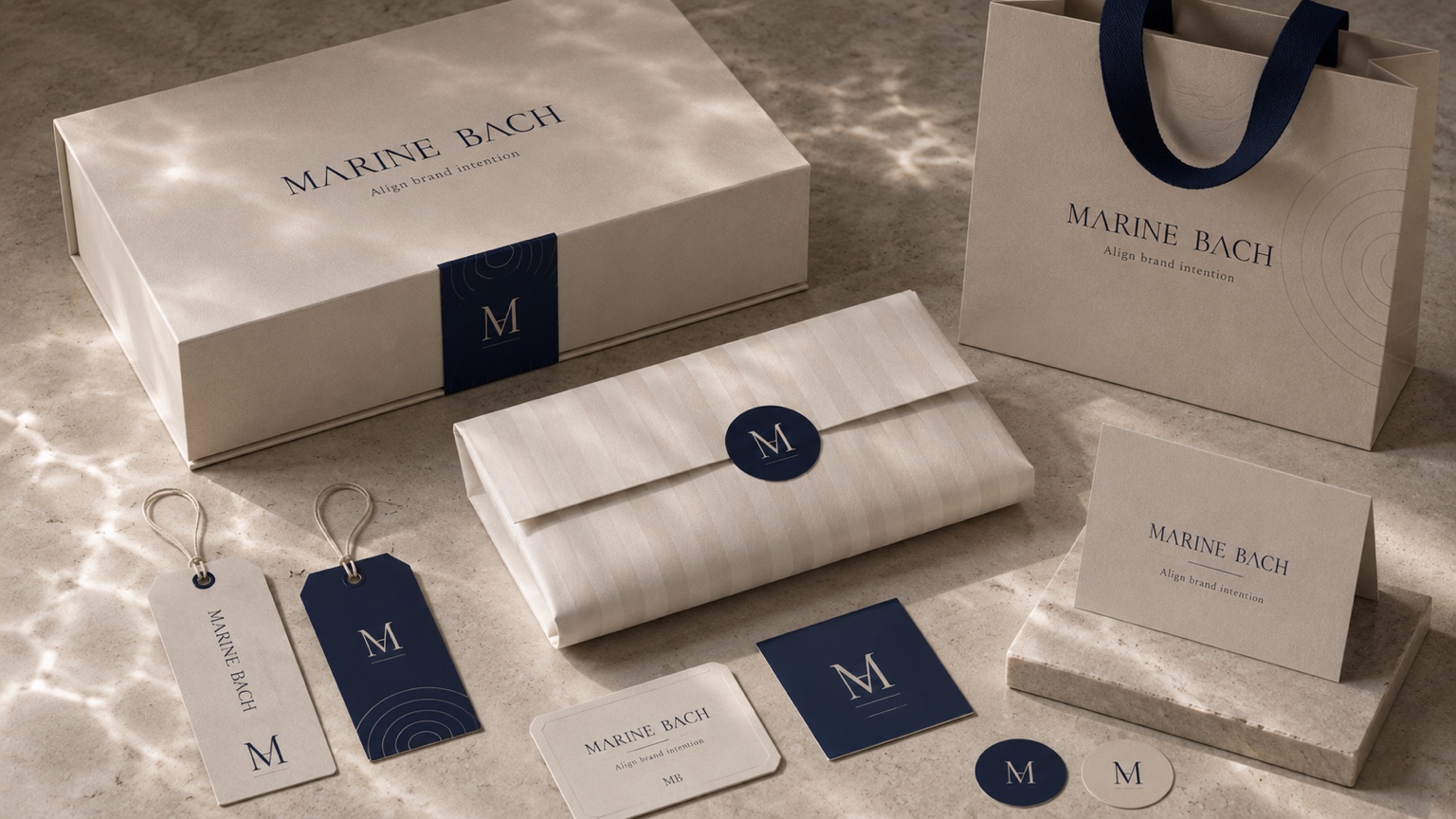
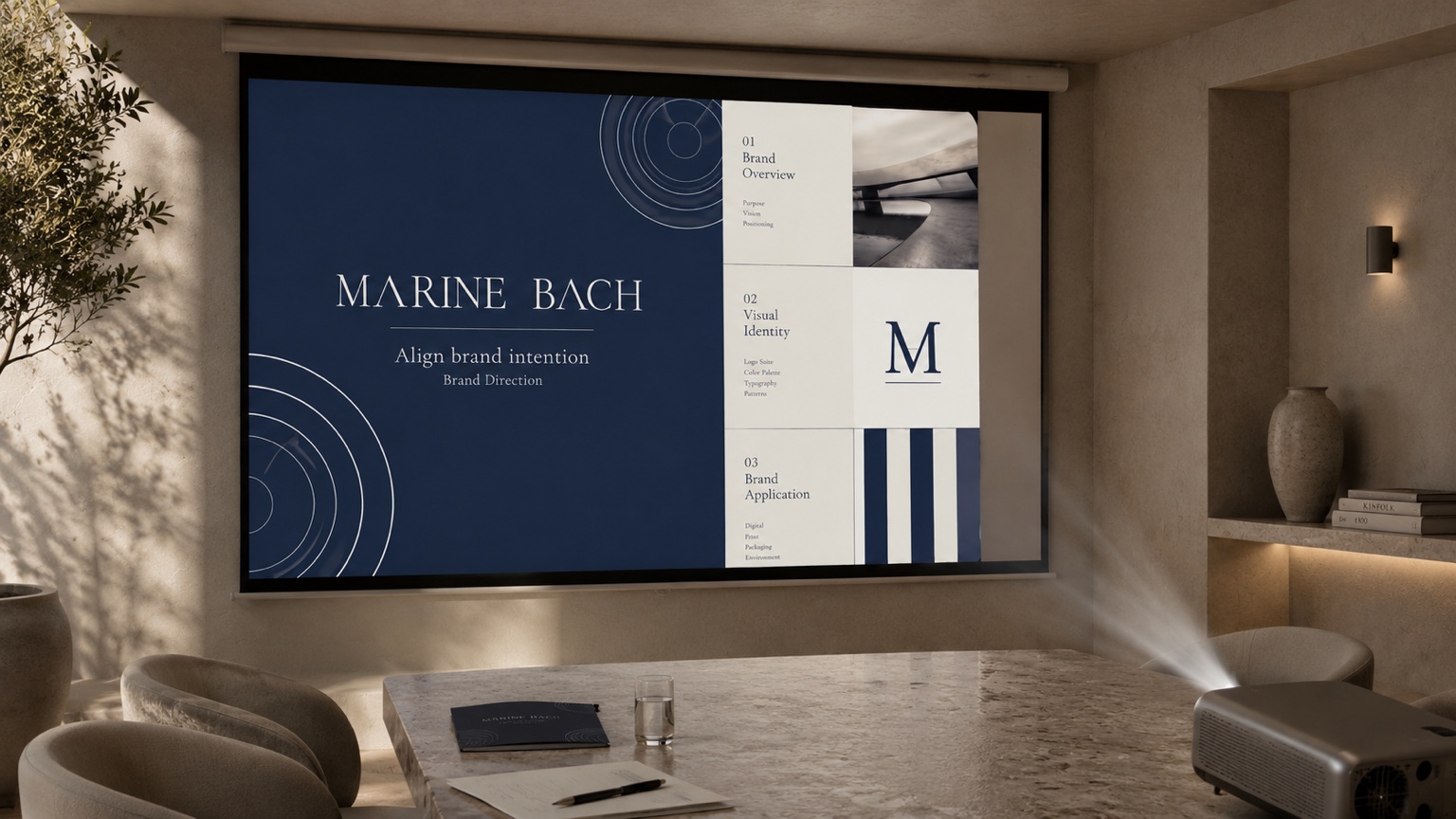
Tailored brand direction, not a standardized framework.






Marine holds the stillness of the ocean; Bach carries the movement of a stream. Their meeting point becomes a line.
Image language · horizon
The waterline as visual structure











Clear motion that shows the brand's personality and values.




The display face holds the headline, the serif balances the system, and the body face supports long-form readability.

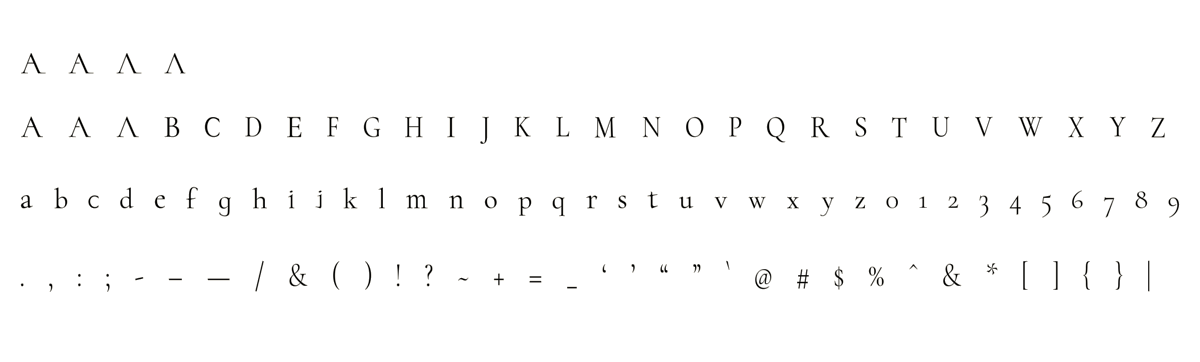
A custom typographic approach was applied to support the logo and visual system. Depending on the scope of the project, this may extend into bespoke lettering or the development of a functional custom typeface.
The working display companion. It carries titles and quotes where the custom face is not yet set.
The body face keeps the page readable.
In client work, this becomes a practical guideline section: type roles, spacing rules, contrast checks, logo use, source references, and handover notes.
A system board that brings logo, colour, typography, pattern, and visual standards into one view.
A reference document covering brand direction, logo use, visual standards, application rules, and delivery notes.
Primary logo, secondary logo, submark, and favicon prepared in the required vector and image formats.
A moving identity piece for use across website, social, opening, and related brand moments.
Type direction, palette values, contrast standards, hierarchy, and basic usage rules.
Graphic elements for light backgrounds, dark backgrounds, spacing-led use, and applied use.
Custom typographic direction for wordmark, headline, cover, and selected brand material. When needed, this may begin as lettering direction and extend into a separate font file development stage.
An application guide including file organisation, usage scope, source records, and licensing notes.